
P0152 Code: O2 Sensor Circuit High Voltage (Bank 2) — Causes & Fix

P0152 means your engine's bank 2 upstream oxygen sensor is reporting a voltage that's too high — usually because that side is running rich, or because the sensor or its wiring has shorted. It's a fuel-and-emissions code, rarely an immediate engine threat, and many cases are a DIY fix once you read the fuel trims.
P0152 = "O2 Sensor Circuit High Voltage (Bank 2, Sensor 1)" — the upstream oxygen sensor on bank 2 is reporting a voltage higher than the ECM expects, and holding there too long.
A healthy narrowband O2 sensor swings quickly between about 0.1V (lean) and 0.9V (rich). High, steady voltage tells the ECM there's very little oxygen left in the exhaust — i.e. a rich mixture — or that the signal wire is being fed voltage it shouldn't see. A reading parked above ~1.1V is electrically impossible for the sensor to make on its own, which points straight at a wiring short rather than the engine.
Diagnostic priority: (1) read all codes + freeze frame; (2) graph the bank 2 sensor 1 voltage and read short/long-term fuel trims — your decisive split; (3) if trims are strongly negative, chase the rich cause (injector, fuel pressure, MAF); (4) if voltage is stuck high with normal trims, inspect the sensor, connector, and signal wire; (5) replace only the confirmed-bad part and re-verify with a drive cycle.
What does P0152 actually mean?
The upstream (pre-catalyst) oxygen sensor measures how much oxygen is left in the exhaust and reports it to the ECM as a voltage. On a narrowband sensor that voltage moves on a tight scale: roughly 0.1V means lean (lots of leftover oxygen) and 0.9V means rich (almost none). The ECM constantly nudges fuel delivery to keep that signal flipping back and forth around the ideal 14.7:1 air-fuel ratio.
P0152 sets when the bank 2, sensor 1 signal stays higher than expected for too long. Bank 2 is the side of the engine that does not contain cylinder #1 — so this code only appears on V6, V8, V10, and flat/boxer engines that have two cylinder banks. Sensor 1 is the upstream sensor, before the converter. A sustained high reading means one of two things: the exhaust on that bank really is rich (low oxygen), or the sensor's signal circuit is shorted to a voltage source so it reads high no matter what the engine does. Anything parked above about 1.1–1.2V is the tell-tale of the second case — the sensor itself can't physically generate that.
What are the symptoms of P0152?
Sometimes the warning light is the only clue; other times you'll feel the rich condition behind it:
- Check Engine Light — steady; sometimes the only symptom
- Poor fuel economy — a rich bank burns extra fuel
- Black / sooty exhaust or a fuel smell — unburned fuel from the rich side
- Rough idle, hesitation, or an occasional misfire — when the mixture is well off
- Failed emissions / smog inspection — guaranteed while the code is active
- Fouled spark plugs over time — carbon from prolonged rich running
- No driveability change at all — common when the cause is the sensor or wiring rather than a true rich condition
Is P0152 serious?
Moderate. You can usually keep driving short-term, but a true rich condition isn't something to leave for months — here's the realistic picture:
- Faulty / contaminated O2 sensorno engine damage · $50–$350 fix
- Wiring / connector shortno engine damage · $20–$200 fix
- Real rich condition (injector, fuel pressure)fouls plugs · risks the cat · fix promptly
- Failed emissions inspectionguaranteed until cleared
- Ignored long-term rich runningoverheats & can ruin the catalytic converter
What causes a P0152 code? Ranked by frequency
Rich Fuel Mixture on Bank 2
35% of casesThe most common real cause. If bank 2 is genuinely running rich, a healthy O2 sensor correctly reports high voltage. Typical sources: a leaking or dripping fuel injector on that bank, high fuel pressure or a failed fuel-pressure regulator, or a mass-air-flow (MAF) sensor over-reporting airflow so the ECM adds too much fuel. Read the bank 2 fuel trims first — strongly negative numbers confirm a true rich condition.
Fix: $60–$450 injector / regulator / MAFFaulty or Contaminated O2 Sensor (Bank 2, Sensor 1)
25% of casesOxygen sensors wear out and get poisoned — by silicone (the wrong sealant), coolant, or oil — which can bias the signal high or make it stick. A sensor that no longer switches and parks high (but not impossibly high) while fuel trims sit near 0% is usually the culprit. These are a wear item, especially past 100k miles.
Fix: $50–$350 sensor + laborSignal Wire Shorted to Voltage
15% of casesIf the sensor's signal wire shorts to the heater's battery feed or the ECM's reference voltage, the ECM sees a high reading the sensor never produced — often pinned above 1.1V, which the sensor can't physically generate. Inspect the harness near hot exhaust and sharp edges for melted or chafed insulation.
Fix: $20–$200 wiring repairConnector / Wiring Fault
12% of casesCorroded pins, water in the connector, a spread terminal, or a poor sensor ground can all skew the signal. Unplug the connector and check for green corrosion and bent pins, and confirm a clean ground. Back-probe the signal wire while the engine runs to see whether the fault follows the wiring or the sensor.
Fix: $20–$150 connector / pigtailOil or Coolant Consumption Fouling the Sensor
7% of casesAn engine burning oil or leaking coolant internally (for example a failing head gasket) coats the sensor and can drive a steady high reading on that bank. If you're topping up oil or losing coolant, fix the underlying consumption — a new sensor will just foul again.
Fix: varies with the underlying repairExhaust Leak or Wrong / Aftermarket Sensor
6% of cases · RareA leak upstream of the sensor pulls in outside air and skews readings, and a cheap or incorrect aftermarket sensor can read inaccurately out of the box. Use the correct OEM-grade sensor for your bank and seal any exhaust leaks ahead of it before condemning the fuel system.
Fix: $20–$200 sensor / leak repairWhat you'll need
Tools
- OBD2 scanner with live O2 data + fuel trims iCARZONE MA200 Plus ›
- Digital multimeter (voltage, ohms)
- O2 sensor socket (22 mm) + penetrating oil
- Fuel pressure gauge (to check for high fuel pressure)
- Back-probe pins / test leads
- Wiring diagram + bank/sensor location for your vehicle
Parts & supplies
- O2 sensor (Bank 2, Sensor 1, OEM-grade)$35–$300
- Fuel injector (single)$40–$250
- Fuel-pressure regulator$30–$200
- MAF sensor (or cleaner)$10–$300
- O2 connector / pigtail$10–$40
- Wiring repair supplies$10–$30
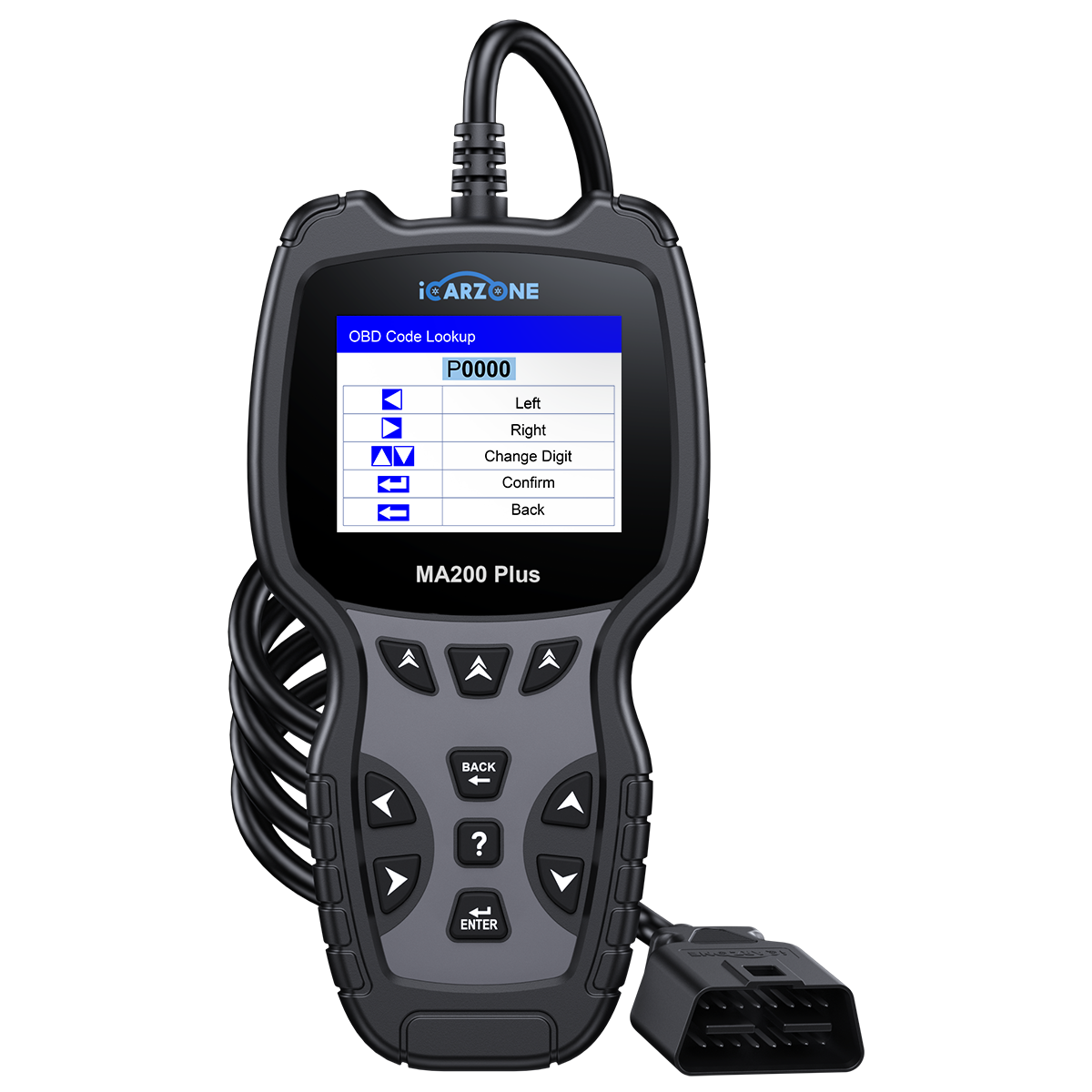
iCARZONE MA200 Plus — All-System OBD2 Scanner
Graph the bank 2 sensor 1 oxygen voltage live and read short- and long-term fuel trims side by side, so you can tell a real rich condition from a sensor or wiring fault before buying parts. Freeze-frame shows the engine state when the code set, and full all-system ECU access covers engine, transmission, ABS and more. Auto VIN, battery test, and 6 reset services built in.
- All-system ECU diagnosis
- Full OBD2 live data + graphing
- Live O2 voltage & fuel trims
- 6 services: Oil/BMS/EPB/SAS/DPF/TPMS
- Auto VIN + battery test
- 10,000+ models · lifetime updates
How do you fix a P0152 code?
Work in order. The live-data check in Step 2 is your free, decisive split — it tells you whether to chase the fuel system or the sensor/wiring before spending a cent.
Scan all codes and note the freeze frame
- Record every code. P0152 often appears with rich codes (P0172 / P0175 system too rich) or other O2 codes (P0132, P0158). Freeze-frame shows RPM, load, and fuel trims at the moment it set.
- Confirm which physical side is bank 2 for your engine (see the deep-dive below) so you test — and, if needed, replace — the right sensor, not the bank 1 one.
Graph the bank 2 sensor 1 voltage and read fuel trims — your decisive split
- With the engine warm and running, graph the B2S1 voltage. Healthy = rapid swings between ~0.1V and ~0.9V. A flat line stuck high is the fault.
- Read short- and long-term fuel trims for bank 2. Strongly negative trims (e.g. −15% to −25%) mean the ECM is pulling fuel because the bank is truly rich → chase the fuel cause (Step 4).
- Trims near 0% with the voltage pinned high → the sensor or its wiring is lying → go to Step 3.
- A reading above ~1.1V is electrically impossible from the sensor → suspect a signal-wire short to voltage.
Inspect the sensor, connector, and signal wire
- Unplug the B2S1 connector; look for corrosion, water, bent or spread pins, and melted insulation near the exhaust.
- Back-probe the signal wire with the engine running. If the signal stays pinned high even with the sensor disconnected, suspect a wiring short to voltage; if it behaves only at the ECM end, the sensor is suspect.
- Confirm the sensor ground is clean and tight.
Check the fuel system (if trims confirmed rich)
- Check fuel pressure against spec with a gauge; high pressure points to a fuel-pressure regulator or return-line fault.
- Look for a leaking / dripping injector on bank 2 (injector balance test, or fuel-fouled plugs on that bank).
- Inspect the MAF sensor — an over-reporting MAF makes the ECM add too much fuel; cleaning or replacement often fixes it.
Replace the confirmed-bad part — final step
- Replace only what you've proven faulty: the O2 sensor, an injector, the regulator, the MAF, or the wiring. Use OEM-grade O2 sensors and the correct part for your bank.
- Clear the code and drive a full warm-up / cruise cycle, then recheck the voltage and trims.
- If it returns, recheck the wiring and confirm you addressed any oil/coolant consumption fouling the sensor — and that you replaced the bank 2 sensor, not bank 1.
How much does P0152 cost to fix?
Costs range from a few dollars for a connector repair to a few hundred for an OEM sensor or fuel component — and far more only if a long-ignored rich condition has already damaged the catalytic converter. Many cases land under $200 DIY once you've identified the real cause.
| Repair | DIY | Shop | You save | Type |
|---|---|---|---|---|
| Diagnosis (scan + live data) | $0 (free with tool) | $80–$150 | Up to $150 | Free First Step |
| O2 connector / pigtail repair | $10–$40 | $80–$180 | Up to $140 | DIY Easy |
| MAF clean | $8–$15 | $50–$120 | Up to $105 | DIY Easy |
| Signal wiring repair | $10–$30 | $90–$250 | Up to $220 | DIY Moderate |
| O2 sensor (Bank 2, Sensor 1) | $35–$300 | $150–$450 | Up to $410 | DIY Moderate |
| MAF sensor (replace) | $40–$300 | $150–$450 | Up to $410 | DIY Moderate |
| Fuel-pressure regulator | $30–$200 | $150–$400 | Up to $370 | DIY Moderate |
| Fuel injector (single) | $40–$250 | $200–$500 | Up to $450 | Often Shop |
| Catalytic converter (if ruined by long rich running) | $200–$1,200 | $600–$2,500 | Varies | Shop Friendly |
Which vehicles are most prone to P0152?
P0152 only appears on engines with two cylinder banks — V6, V8, V10, and flat/boxer layouts — so it shows up most on trucks, SUVs, and V6/V8 cars. The exact "bank 2" side varies by engine, and identifying it correctly is the single biggest way owners avoid replacing the wrong sensor. Deep-dives below.
| Make | Model / engine | Years | Primary cause & notes | Risk |
|---|---|---|---|---|
| GM / Chevrolet / GMC | Silverado, Sierra, Tahoe, Suburban (4.8 / 5.3 / 6.0L V8) | 1999–2019 | Rich from MAF / injectors; aging upstream sensors. | Medium |
| Ford / Lincoln | F-150, Explorer, Mustang, Expedition (3.5 EcoBoost V6, 5.0 / 5.4 V8) | 2004–2020 | Sensor contamination + rich from injectors / fuel pressure. | Medium |
| Toyota / Lexus | Tundra, 4Runner, Tacoma, RX, GX (V6 & V8) | 2005–2020 | O2 sensor wear; bank 2 location varies by engine. | Medium |
| Nissan / Infiniti | Pathfinder, Titan, 350Z / 370Z, QX (VQ V6, V8) | 2004–2019 | Sensor aging plus intake / fuel issues. | Medium |
| RAM / Dodge / Chrysler | 1500, Charger, 300, Durango (3.6 V6, 5.7 HEMI V8) | 2005–2020 | Rich from injectors / fuel pressure; sensor wear. | Medium |
| Honda / Acura | Pilot, Odyssey, Ridgeline, MDX (J-series V6) | 2003–2017 | Sensor contamination; bank 2 is the firewall side. | Low |
| BMW / Mercedes / Audi | Various V6 / V8 | 2004–2018 | Sensor wear + wiring faults; OEM sensors preferred. | Low |
Which side is Bank 2, and where's Sensor 1?
The most expensive P0152 mistake is replacing the bank 1 sensor by accident. Get the orientation right before you touch a wrench:

Bank 1 vs Bank 2 on V6 and V8 engines — Sensor 1 is the upstream O2 sensor on each bank, before the catalytic converter.
- Bank 2 = the side without cylinder #1. On many transverse (sideways-mounted) V6 cars — lots of Honda, Toyota, Nissan, and Ford models — bank 2 is usually the bank toward the radiator. On longitudinal V8 trucks it's the side opposite cylinder #1; on many GM trucks that's the driver's side — but always confirm for your specific engine.
- Sensor 1 = upstream, before the catalytic converter, screwed into the exhaust manifold or front pipe. Sensor 2 is after the cat — that would be P0158, not P0152.
- Confirm with data. Use a firing-order / cylinder-location diagram for your exact engine, or your scanner's live-data labels (O2S21 = bank 2, sensor 1).
Action plan: identify bank 2 from a cylinder-location diagram → find the upstream sensor on that bank → graph O2S21 and the bank 2 trims before replacing anything.
P0152 by platform — common rich causes by make
Across the V6 / V8 platforms that throw P0152 most, a handful of causes repeat:
- GM V8 trucks: a dirty or over-reporting MAF and aging upstream sensors are common — clean and verify the MAF and read the trims before buying sensors.
- Ford V6 / V8: injector and fuel-pressure issues plus sensor contamination; check fuel pressure and look for a fuel-fouled bank.
- Toyota / Nissan / Honda V6: upstream sensors are a wear item past ~100k miles, and oil burning can foul them — fix any consumption first.
- European V6 / V8 (BMW, Mercedes, Audi): wiring and connector faults plus sensor aging; use OEM-grade sensors and inspect the harness near the exhaust.
Check for a TSB / recall: at NHTSA.gov enter your VIN or year/make/model and review any bulletins or campaigns related to O2 sensors or fuel components on your platform. NHTSA recalls & TSBs ›
Should you DIY or call a mechanic?
DIY if you…
- Can read live O2 voltage and fuel-trim data
- Have a multimeter and an O2 sensor socket
- Can identify bank 2 and reach the upstream sensor
- Are comfortable back-probing a connector
- Want to confirm rich-vs-sensor before buying parts
- Want to save $150–$450 over shop diagnostic + labor
Use a mechanic if…
- The sensor is seized into a rusted exhaust
- You confirm a true rich condition but can't isolate the cause
- You suspect a leaking injector or internal oil / coolant consumption
- Live data shows an impossible voltage and you can't trace the short
- The catalytic converter may already be damaged
- You'd rather not disturb tight or fragile exhaust hardware
Frequently asked questions
Can I drive with a P0152 code?
Short-term, yes — it won't strand you. But if the bank is truly running rich, you're wasting fuel, fouling spark plugs, and slowly cooking the catalytic converter, and you'll fail an emissions test. Diagnose it within a week or two — sooner if you smell fuel, see black smoke, or feel a misfire.
What's the difference between P0152, P0132, and P0151?
All three are upstream O2 circuit codes. P0152 = high voltage on bank 2; P0132 = high voltage on bank 1; P0151 = low voltage on bank 2 (the opposite reading). "Bank 2" is the engine side that doesn't contain cylinder #1. Confirming the bank and the direction keeps you from replacing the wrong sensor.
Is P0152 always a bad oxygen sensor?
No — and that's the costly assumption. High voltage can be a genuinely rich mixture (leaking injector, high fuel pressure, over-reporting MAF) with a perfectly good sensor reporting it accurately. The fuel trims tell you which: strongly negative trims mean a real rich condition; near-zero trims with pinned-high voltage point to the sensor or wiring.
How much does it cost to fix P0152?
It depends on the cause. A connector or wiring repair can be $10–$40 DIY. An OEM-grade bank 2 sensor 1 is roughly $35–$300 in parts. Fuel-side repairs (injector, regulator, MAF) run $40–$300 in parts. Shop labor adds $80–$200+. Many cases land under $200 DIY once you've found the real cause.
What scanner do I need to diagnose P0152?
One that graphs live O2 sensor voltage and shows short- and long-term fuel trims, so you can separate a rich condition from a sensor or wiring fault. The iCARZONE MA200 Plus ($179.99) does full OBD2 live data with O2 and fuel-trim readings, all-system ECU access, freeze-frame, Auto VIN, battery test, and 6 reset services.
Why does P0152 come back after I replaced the O2 sensor?
Usually because the sensor wasn't the cause. If the bank was actually rich, a new sensor will still correctly report high voltage until you fix the injector, fuel pressure, or MAF. If the sensor keeps fouling, look for oil burning or a coolant leak coating it — and double-check you replaced the bank 2 sensor, not bank 1.
Quick verdict
- Step 1 — free first: scan codes + freeze frame, then graph the bank 2 sensor voltage and read the fuel trims. $0 with a capable scanner.
- Step 2 — read the split: strongly negative trims = a real rich condition (chase injector / fuel pressure / MAF); near-zero trims with high voltage = sensor or wiring.
- Step 3 — fix only what's proven: replace the confirmed-bad sensor, injector, MAF, or wiring with OEM-grade parts, then clear and drive-cycle verify.
Diagnose it right the first time
The iCARZONE MA200 Plus graphs your bank 2 O2 voltage next to live fuel trims — so you know whether you're chasing a sensor or a real rich condition before buying parts, across 10,000+ models.