
P0346 Code: Bank 2 Camshaft Sensor Range/Performance

P0346: Prove the Cam Signal
Identify Sensor A, preserve the event and separate electrical evidence from mechanical timing.
DIAGNOSTIC FOCUS
- FAULT TYPE
- Camshaft Position Sensor A Circuit Range/Performance (Bank 2)
- FIRST CHECKS
- Bank and sensor identity, companion codes, circuit integrity and waveform
A range/performance result does not prove the camshaft sensor is defective.
P0346 means Camshaft Position Sensor A Circuit Range/Performance (Bank 2). A range/performance result does not prove the camshaft sensor is defective. Save the full fault record, identify the reporting controller and use the current vehicle-specific procedure.
Check the VIN-specific Bank 2 Sensor A assignment before touching a connector. Compare the actual signal with the expected pattern and evaluate target or timing evidence only through the appropriate OEM branch.
What Does the P0346 Code Mean?
P0346 concerns the range or performance of the camshaft-position Sensor A circuit assigned to Bank 2. Bank 2 is the cylinder bank opposite the one containing cylinder 1, but its physical side depends on the engine. Identify it from service information rather than from a photograph of another vehicle.
The controller evaluates whether camshaft information is credible for the operating condition. A signal can be present yet have an unacceptable pattern or relationship. A generic scanner label does not reveal which edges, synchronization checks or operating conditions the manufacturer monitors.
Sensor A must also be identified by the exact engine diagram. Do not assume that the connector nearest the front of the car is A, or apply a Bank 1 diagram to Bank 2. Supply arrangements, targets, signal types and diagnostic prerequisites vary.
Record the complete code, suffix, reporting module and status. A short description does not establish a common circuit layout.
Compare cam/crank synchronization, available angle data and a physical waveform. A plausible scan value alone cannot prove the signal arriving at the controller is free of dropouts.
Save available freeze frame and note starting behavior, engine temperature, speed, timing noise and recent engine work. A reset or disconnected connector can change the evidence before the cause is found.
P0346 Symptoms, Severity, and Driving Safety
A warning may appear without an obvious running change; record whether the code is current or historical.
Unreliable phase information can accompany extended cranking or a no-start, depending on engine strategy.
Misfire or unstable idle may coexist. Preserve their codes instead of assuming this one code explains everything.
Some engines restrict operation when cam information cannot be trusted; there is no universal fallback behavior.
Heat, vibration or starting conditions may expose a marginal connection or signal.
Timing noise or an oil-pressure warning changes the safety priority and calls for prompt assessment.
Assess the actual running condition and every warning. A stored code with normal operation still deserves diagnosis; it does not guarantee that the next start or trip will be normal.
P0346 Causes and the Evidence That Separates Them
The following are possible diagnostic branches, not a ranking of failure rates. Their relevance depends on the installed cam sensor, target and timing architecture. Begin with the branch identified by the OEM decision tree and the complete code pattern.
Shared supply or prerequisite fault
A weak electrical baseline or companion crankshaft fault can make camshaft evidence unreliable.
How to prove it: Check the prescribed power and ground tests and resolve prerequisites before judging one waveform.
Check firstConnector or signal-path defect
Loose contact, contamination, damaged shielding or wiring interference may distort the signal.
How to prove it: Inspect the correct connector and test the circuit under the conditions associated with the fault.
Check firstIncorrect sensor installation
Wrong application, poor seating or target-clearance issues can affect signal quality after replacement.
How to prove it: Compare the part, mounting and specified clearance with exact engine service information.
Verify directlySensor output failure
A sensor may lose a usable output while hot or during cranking even when its supply is sound.
How to prove it: Compare the measured output and circuit checks with the OEM waveform at the relevant condition.
Verify directlyTarget or timing problem
A damaged target or incorrect mechanical relationship can make an otherwise working sensor report unexpected information.
How to prove it: Follow the target and cam/crank correlation branch; do not infer chain failure from the code alone.
Verify directlyController or calibration branch
An input-stage problem is a later possibility once the delivered signal and required operating conditions are proven.
How to prove it: Verify feeds, grounds, connectors and applicable software guidance before considering a controller.
Final branchIf the warning followed sensor, cylinder-head, timing-drive or wiring work, compare the timing with the original complaint. Recheck disturbed connections and part compatibility, but do not treat recent work alone as proof of causation. A component should earn replacement through a failed test.
Using JU2000 MAX During P0346 Diagnosis
On a supported vehicle, iCARZONE JU2000 MAX can retrieve accessible module faults, available freeze frame and live data. Preserve the P0346 record before erasing anything. A saved report gives the technician a baseline instead of relying on a remembered warning message.
The official product page describes system diagnostics and bidirectional control. Confirm the exact VIN, controller, software and requested function before purchase. A product feature list does not guarantee every PID, active test, reset or adaptation on every vehicle.
Where supported, save engine-speed, synchronization and cam-angle data with the fault report. JU2000 MAX cannot measure a physical waveform, sensor clearance or mechanical timing; those require the appropriate instruments and service procedure.
iCARZONE JU2000 MAX All-in-One Diagnostic & TPMS Kit
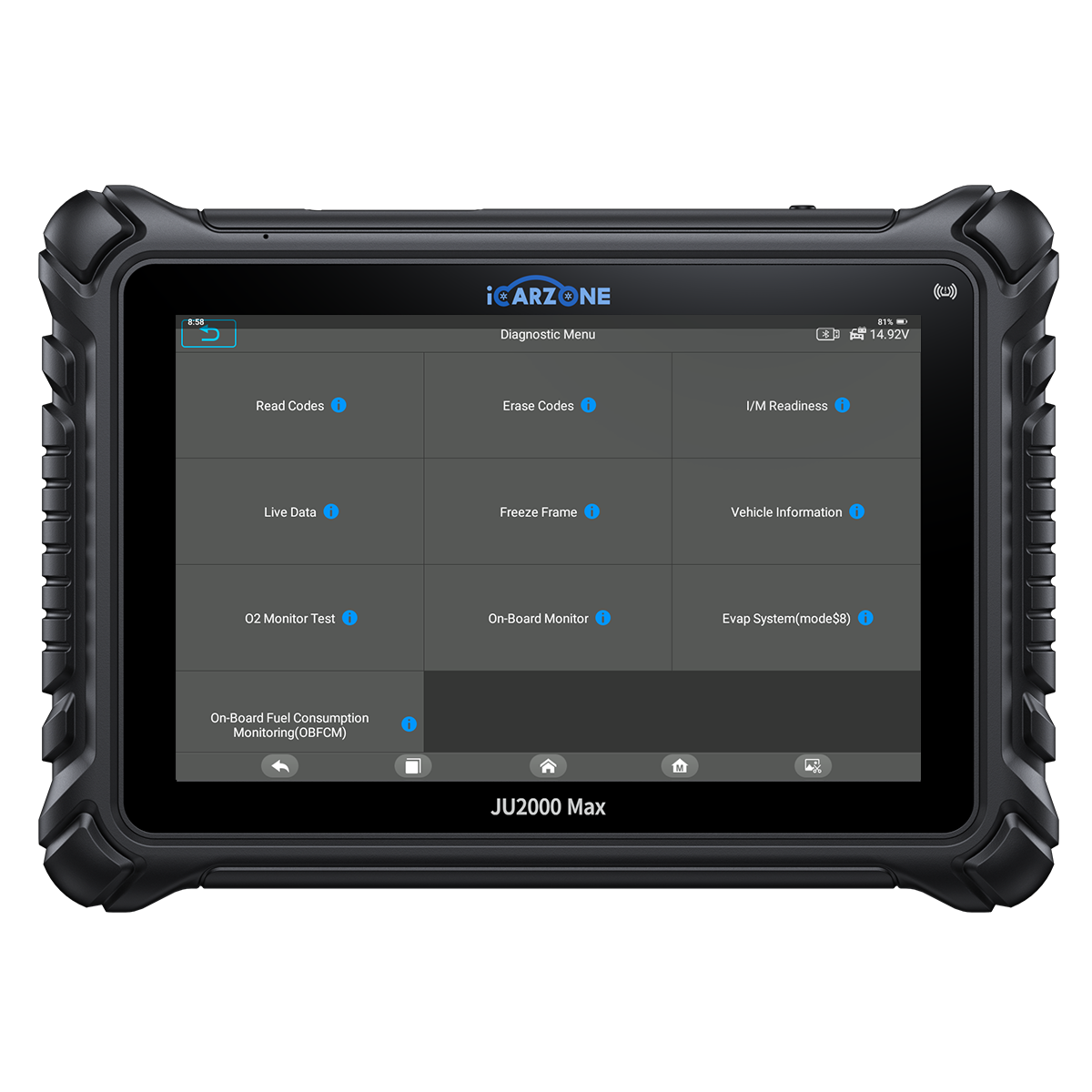
Save the camshaft event and compare supported synchronization data before disconnecting Sensor A.
Use the scanner alongside the prescribed external test equipment and current service information. An unavailable menu is a coverage or access question, not proof that a component failed. Price checked October 8, 2026; confirm the current offer and vehicle coverage on the product page.
How to Diagnose P0346 in 6 Steps
This six-step sequence explains the decisions a diagnosis needs to resolve. It is not a substitute for the VIN-specific service procedure. Keep a record of the test conditions, measured results and comparison limits; do not fill a missing specification with a number from another vehicle.
P0346 Quick Diagnostic Path
-
1
Save the complete original event
- Record all modules' faults, full descriptions, suffixes, status and available freeze frame before clearing P0346. Save companion codes even when they seem unrelated; their timing may identify a shared supply, communication or operating-condition problem.
- Document starting behavior, engine temperature, speed, timing noise and recent engine work. Ask when the warning first appeared and whether it preceded sensor, cylinder-head, timing-drive or wiring work. Do not recreate an unsafe symptom merely to collect a better graph.
-
2
Identify the exact Bank 2 circuit
- Confirm engine code, cylinder numbering, Sensor A and connector view. Record the installed sensor architecture.
- Obtain the applicable waveform and test conditions. Never borrow a pinout, resistance or edge count from another engine.
-
3
Triage shared and mechanical evidence
- Review crankshaft, correlation, VVT and supply codes alongside P0346. Check severe running and oil-pressure warnings first.
- Inspect recent work, accessible routing, mounting and terminals with the vehicle secured. Do not disturb timing components merely to see whether the code changes.
-
4
Prove the electrical signal
- Use approved probing and measurement methods to compare supply, return and signal at the specified points.
- Capture the relevant crank/start or running waveform safely. A sensor-end signal and controller-end signal may expose a wiring problem when compared correctly.
-
5
Separate target and timing branches
- When the circuit is sound, follow the OEM pattern, target and mechanical relationship checks. A correlation problem requires different evidence from a circuit defect.
- On variable-cam engines, assess oil or phaser control only when the procedure directs it. Document the failed check before proposing internal engine work.
-
6
Verify the repair under the right conditions
- Repeat the failed measurement or functional check. Complete only required setup or learning, then compare the result with the saved baseline.
- Follow OEM verification, retain the final scan and disclose incomplete tests. Diagnose any new symptom or code separately.
How to Fix P0346 and Verify the Repair
Restore the circuit
Repair proven terminal, harness, feed or return defects and correct the source of abrasion or contamination.
Correct sensor fit or output
Use the exact replacement only after testing; correct installation and clearance issues where specified.
Repair target or timing faults
Authorize mechanical work only after the relevant target or timing check identifies a defect.
Address the controller branch
Apply the prescribed software or module remedy only after external causes are excluded and applicability confirmed.
Diagnostic time
VIN-specific quoteRequest a quote distinguishing a wiring defect, sensor output fault and target or timing issue. A code read alone does not identify the replacement part.
Wiring and access
VIN-specific quoteQuote proven terminal, harness and access work separately. Correct the source of heat, abrasion or contamination.
Proven component repair
VIN-specific quoteAsk for the exact part, failed test and required supporting items. The correct service unit depends on the vehicle and defect.
Setup and final verification
VIN-specific quoteInclude learning, calibration or programming only when required. Labor, parts and access differ; these are alternative paths, not four automatic charges.
Ask the shop to connect each proposed repair to a finding and separate confirmed defects from conditional work. Keep the original and final reports.
If the code returns after sensor replacement, retain the original and replacement part details. Repeat the failing pattern check instead of treating another new sensor as the default next step.
P0346 OEM Differences and DIY Limits
Audi’s 2014 R8/Spyder reference tables illustrate why exact engine identification matters: P0346 appears with Sensor A Bank 2 wording in one application and a sensor-3 rationality description in another. These are application labels, not a universal physical connector location.
Map Bank 2, Sensor A and its target from the engine-specific diagram before disconnecting anything.
Separate the reported angle or synchronization status from the actual waveform measured at the circuit.
Repeat the failed signal or timing test and the OEM monitor conditions; confirm reliable operation without returning related faults.
Use the current service information for the vehicle being tested. The archived example does not supply a transferable waveform, cam-phase limit or repair instruction for every engine with P0346.
- Save the complete scan and warning text without clearing it.
- Record the conditions and service history accurately.
- Inspect only safely accessible areas under the specified power state.
- Follow the owner manual response to every active warning.
- Use qualified assistance when symptoms make operation unsafe.
- Do not jump, backfeed or force an unidentified circuit or actuator.
- Use the exact isolation procedure and specified test equipment.
- Leave required disassembly, learning or programming to equipped personnel.
Frequently Asked Questions About P0346
What does P0346 mean?
Does P0346 mean the timing chain is bad?
Where is Bank 2 Sensor A?
Can a new cam sensor leave this code unchanged?
Can I keep driving?
Should I clear P0346 before diagnosis?
Can JU2000 MAX help diagnose P0346?
What confirms a successful P0346 repair?
Sources and Technical Review Notes
- Audi 2014 R8/Spyder Quick Reference Specification Book — Application-specific P0346 descriptions; no universal thresholds or location inferred.
- Tags: DTC iCARZONE JU2000 MAX OBD-II P0346
0 comments